Urban2063
Client: African Centre for Cities
Period: July 2025 - December 2025
Multi-stakeholder partnerships
Education & knowledge
Banking & finance

01 — The sneak peek
When research must become movement
For the African Centre for Cities at UCT, we helped turn Urban2063 from an academic initiative into a public knowledge platform on Africa's urban future — building the identity, the digital presence and the communications to carry rigorous research to everyone from ministers to citizens.
02 — The liminal moment
By 2050, Africa will be 60% urban — arriving at that threshold in the same decade the world is meant to reach net-zero. How the continent navigates that transition, on its own knowledge and terms, is among the defining questions of the century. The African Centre for Cities at UCT had the research. What it didn't yet have was reach: Urban2063 was an academic initiative, and academic rigour alone wouldn't move policymakers, practitioners and citizens. The work was to carry it across a threshold — from initiative to platform, from research to movement — without losing the credibility that made it worth hearing. That meant holding two things at once: intellectual authority for ministers, mayors and UN-Habitat, and genuine accessibility for grassroots organisations and the citizen. The brief named print, digital and social. The deeper task was to make African urban-futures research visible, accessible and actionable — a platform, not a feed.
03 — The transformation
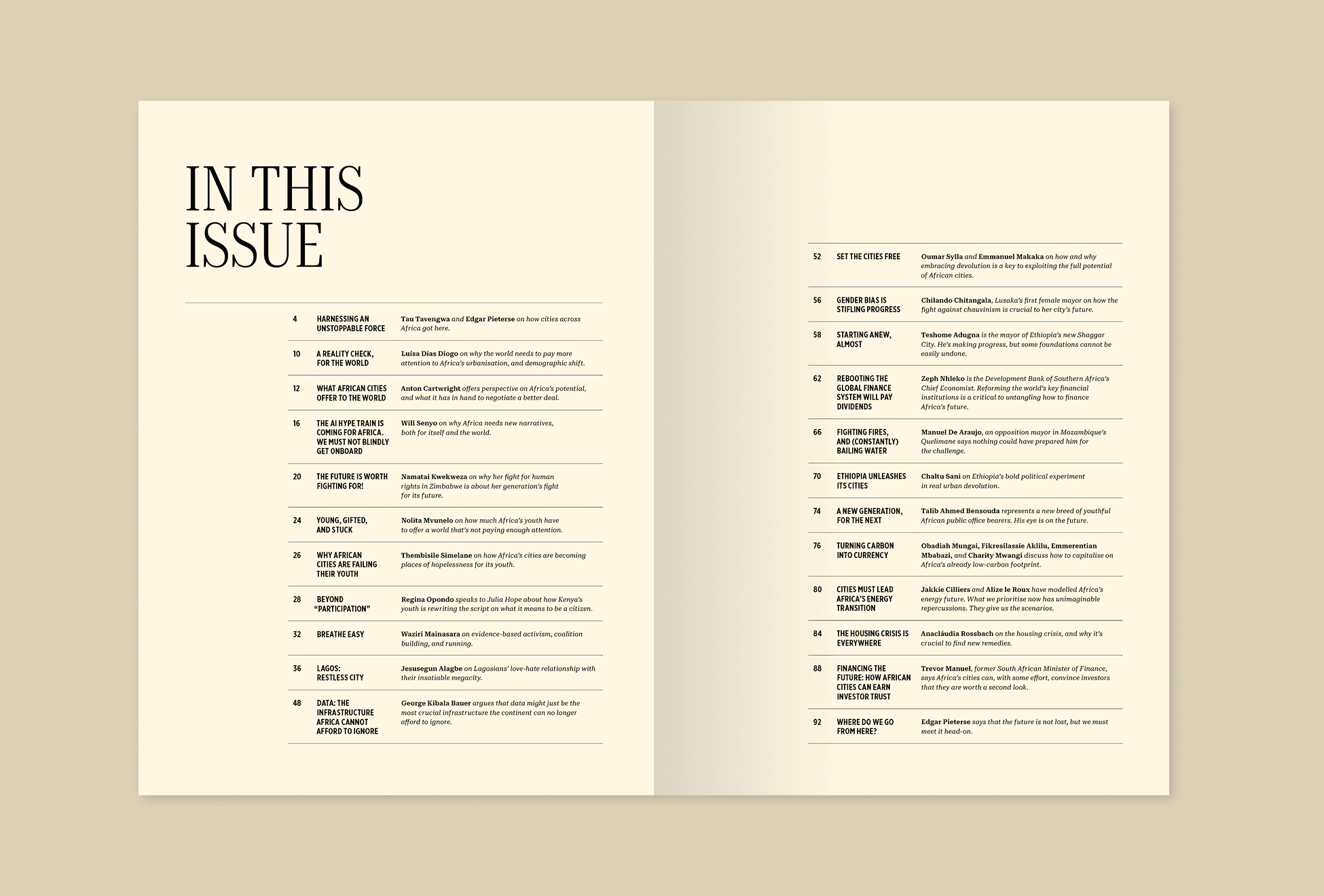
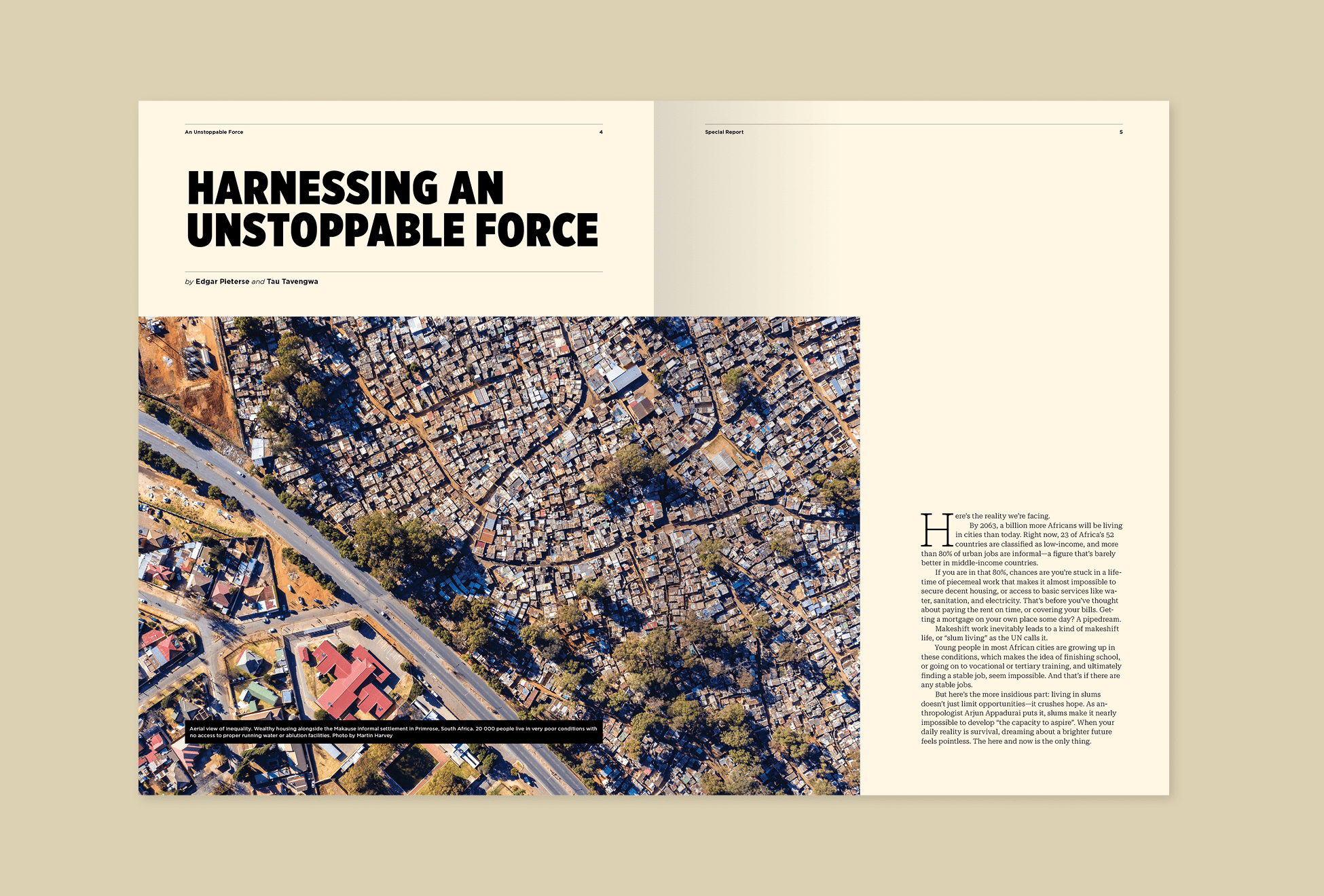
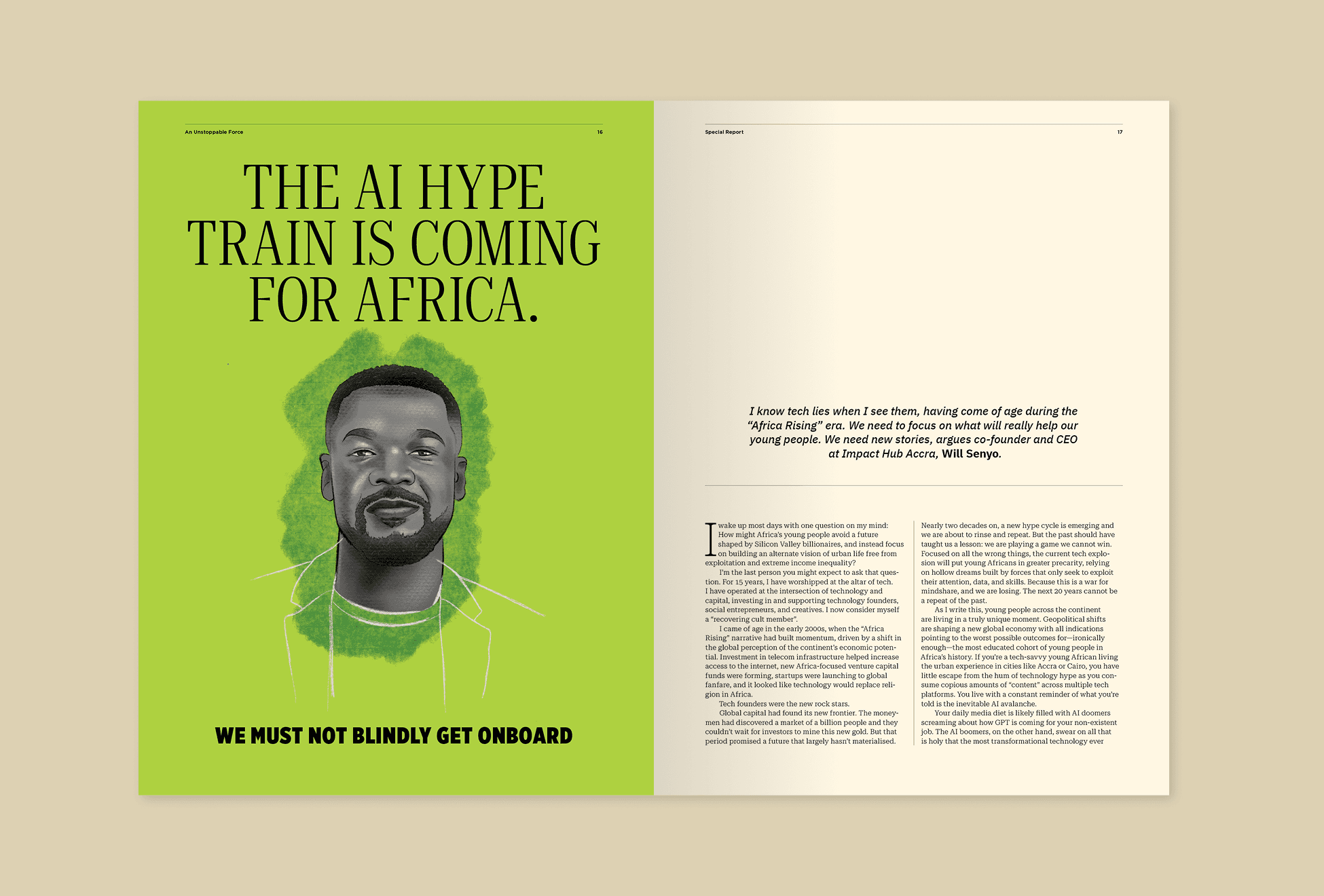
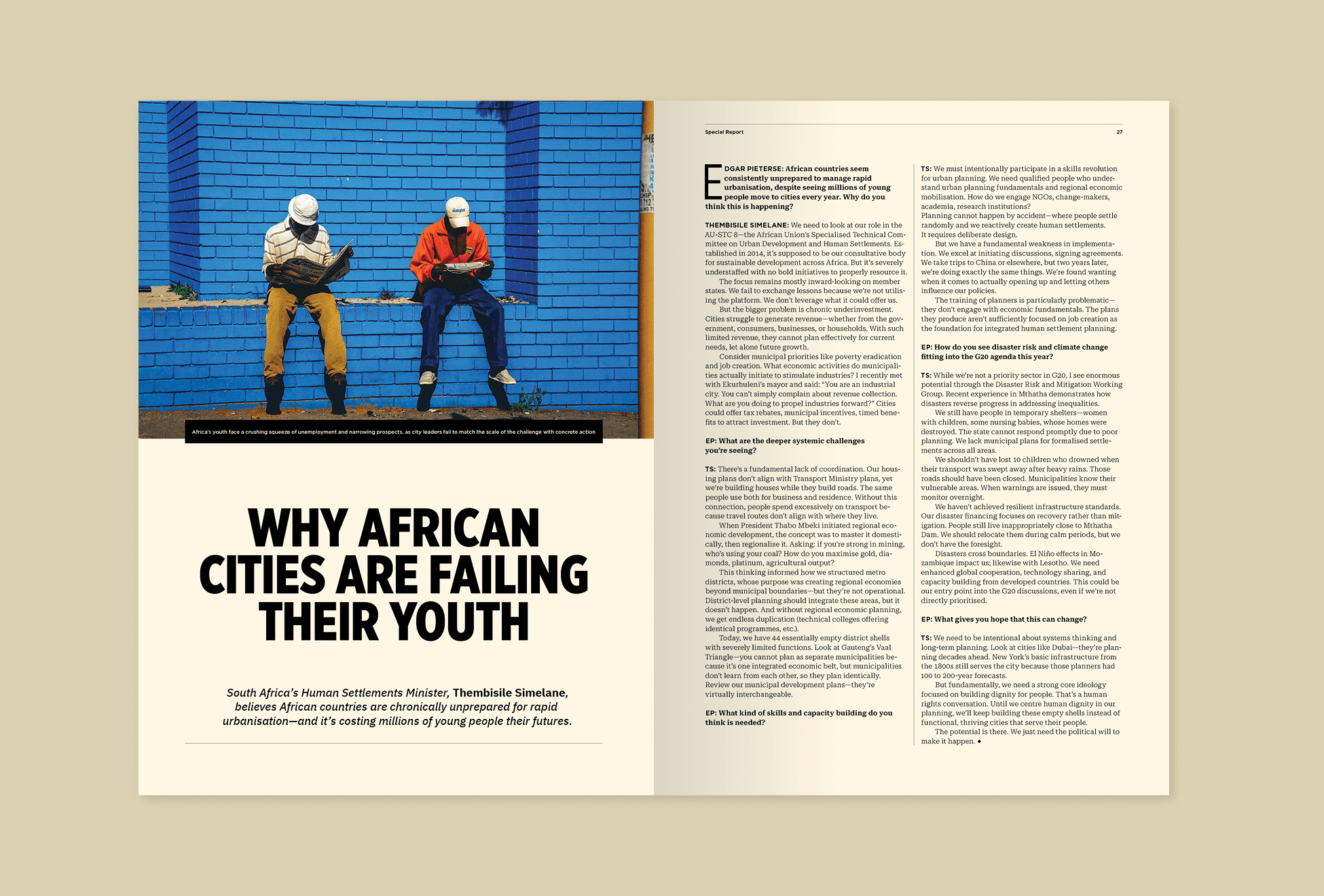
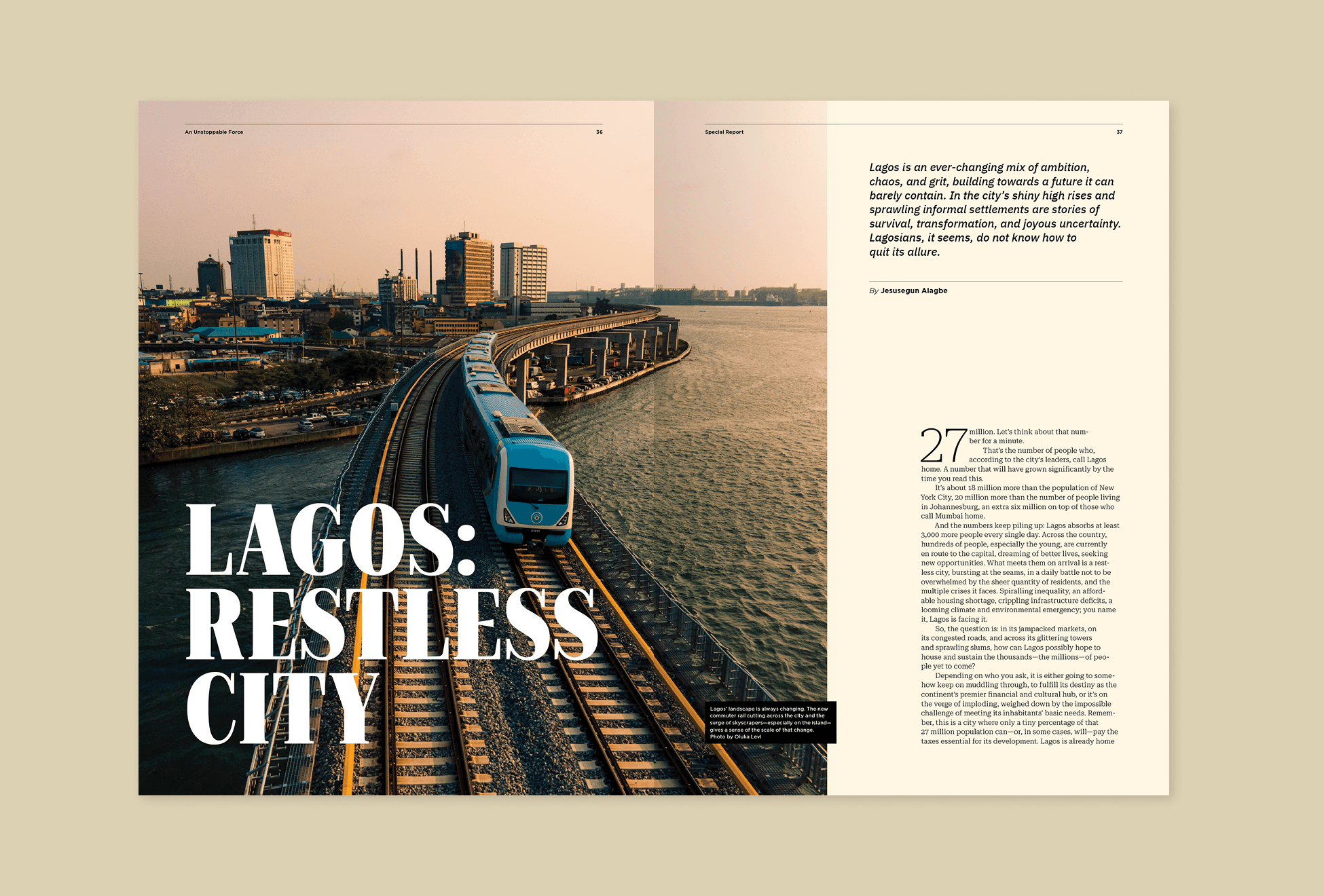
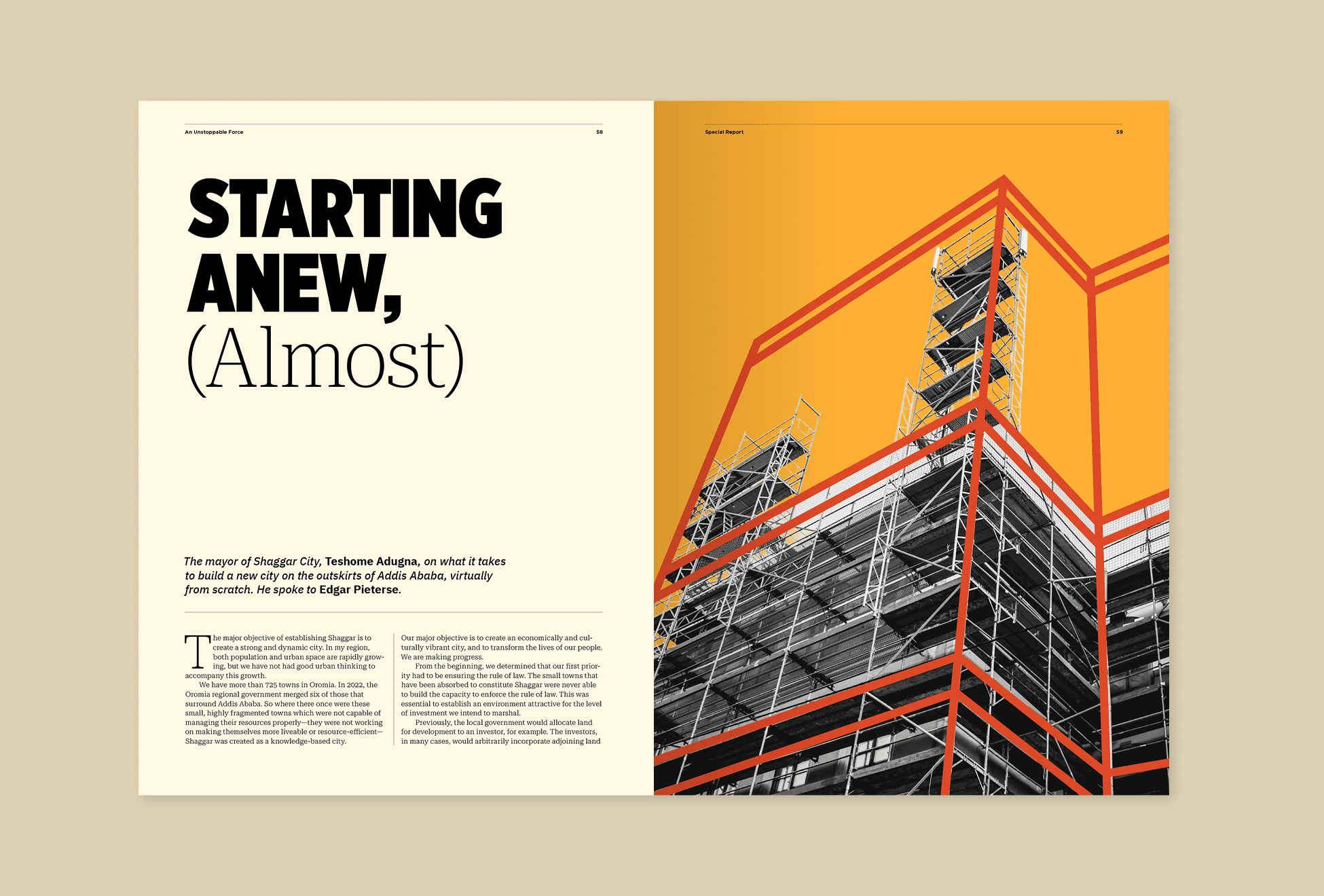
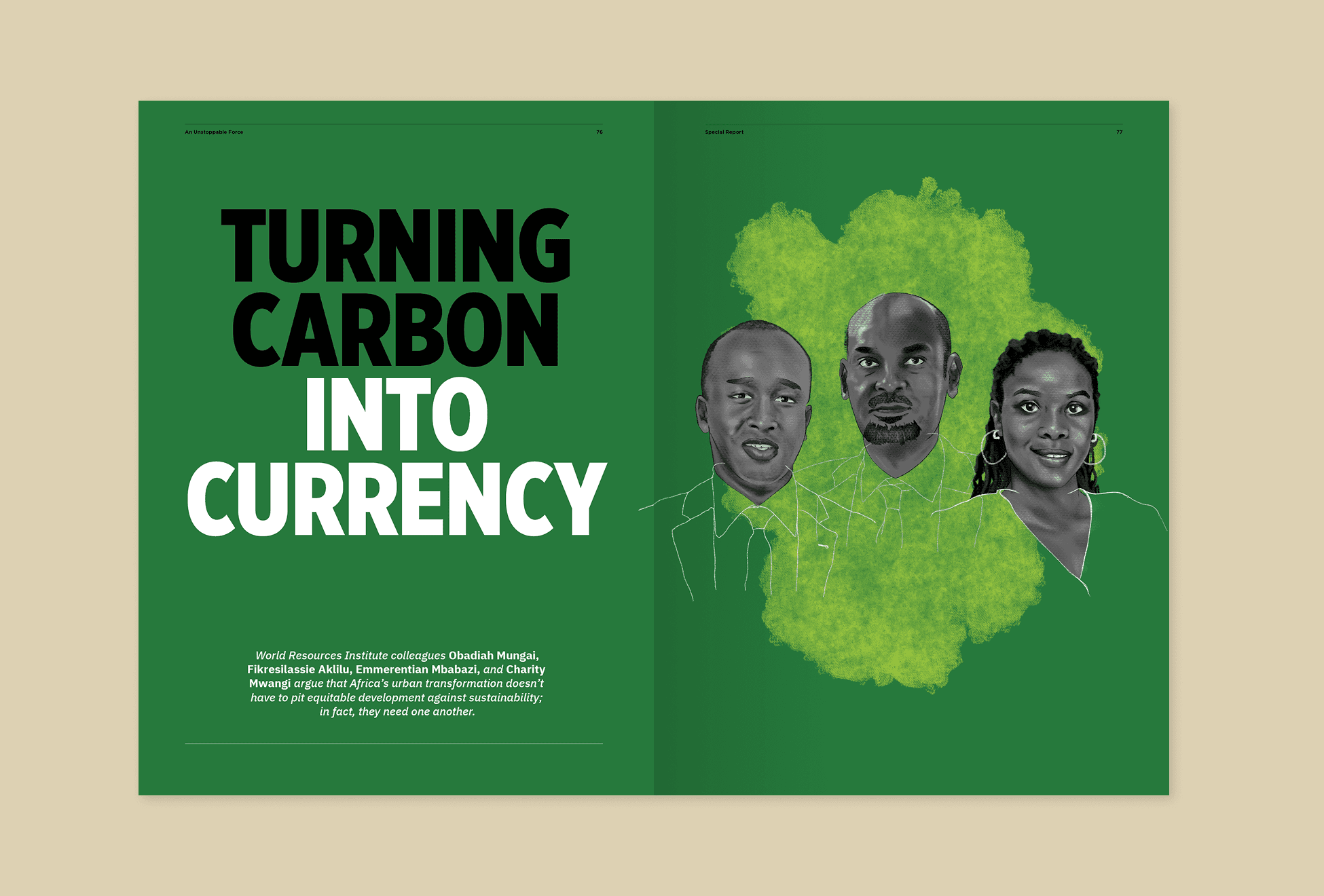
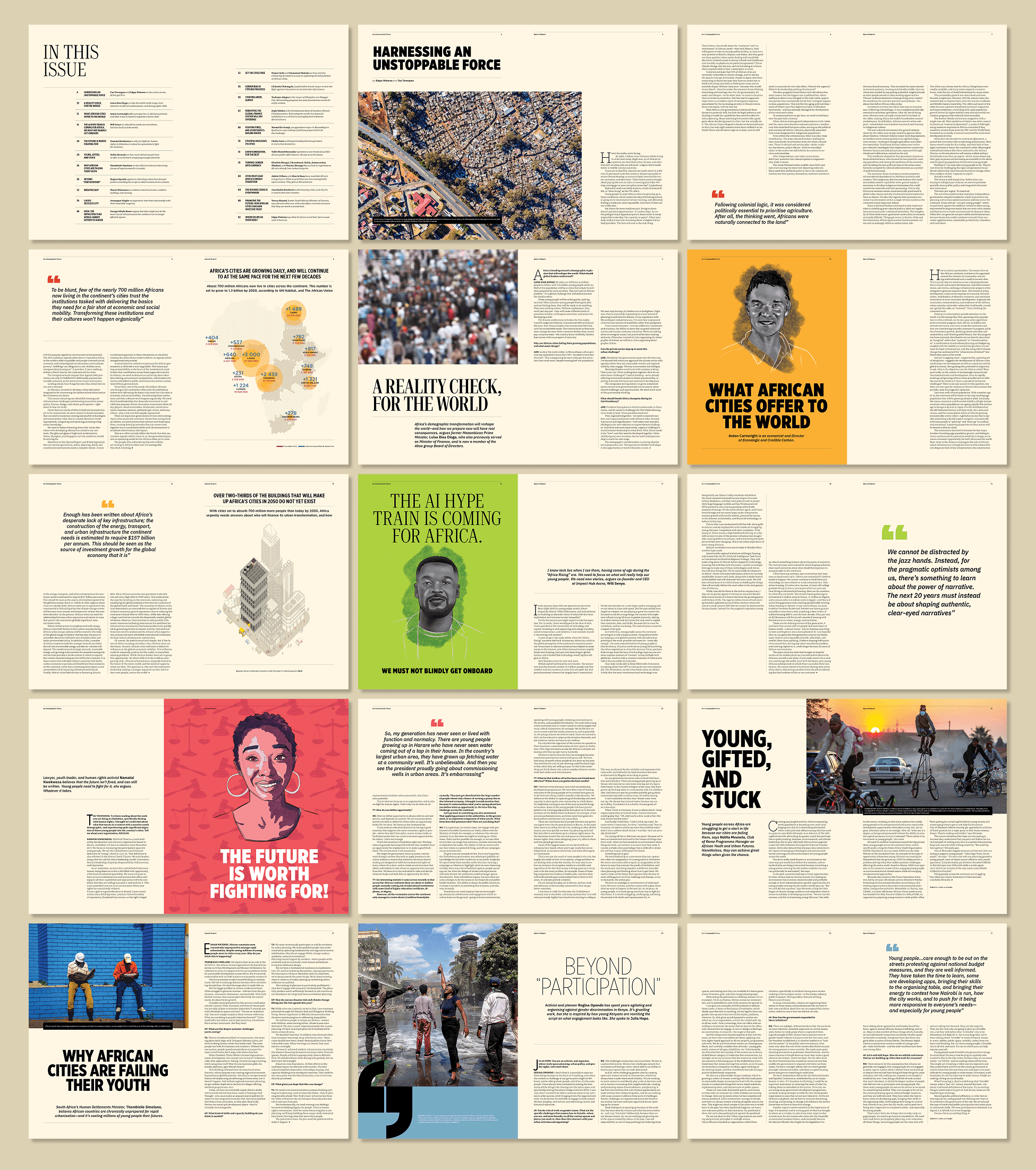
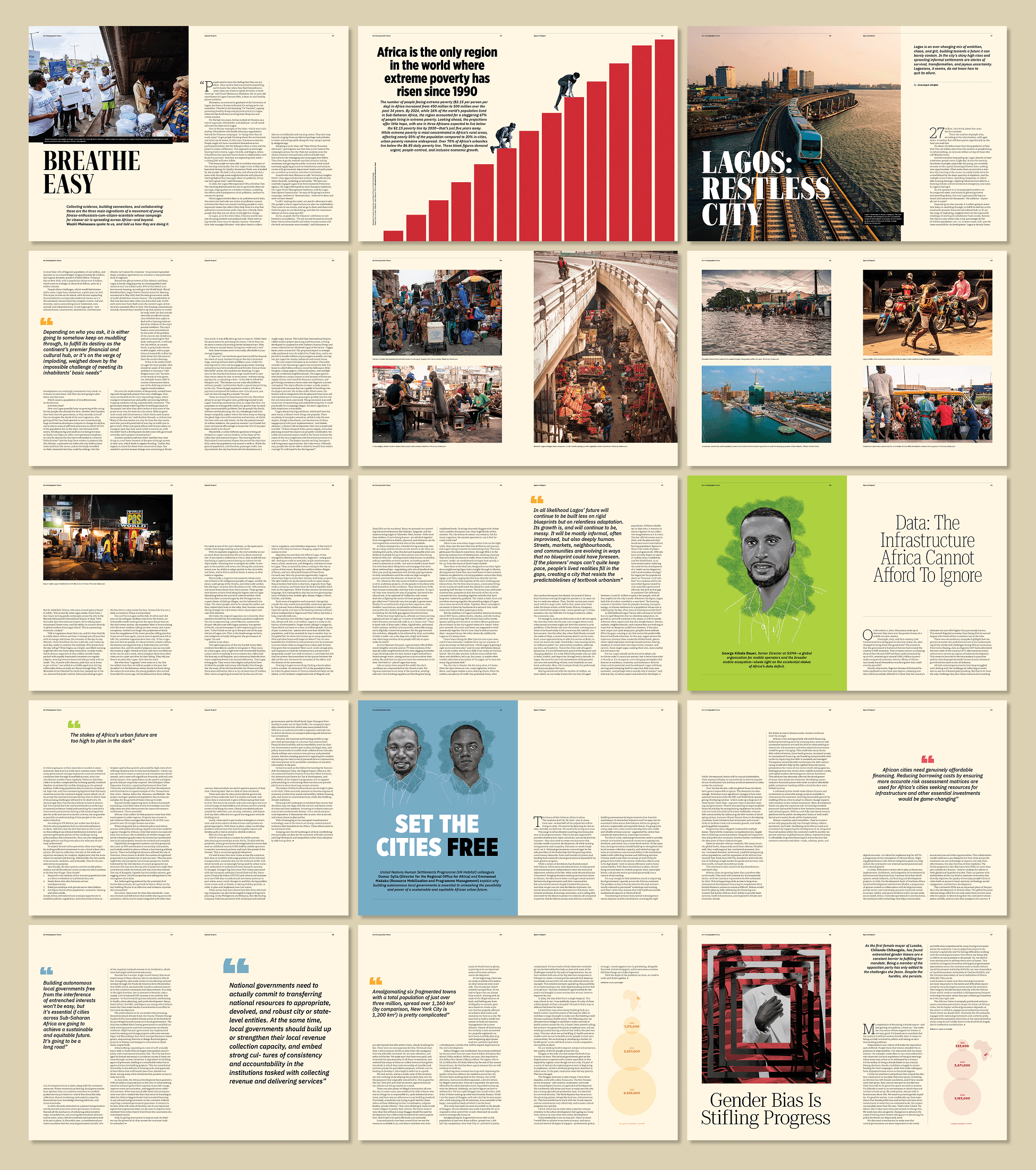
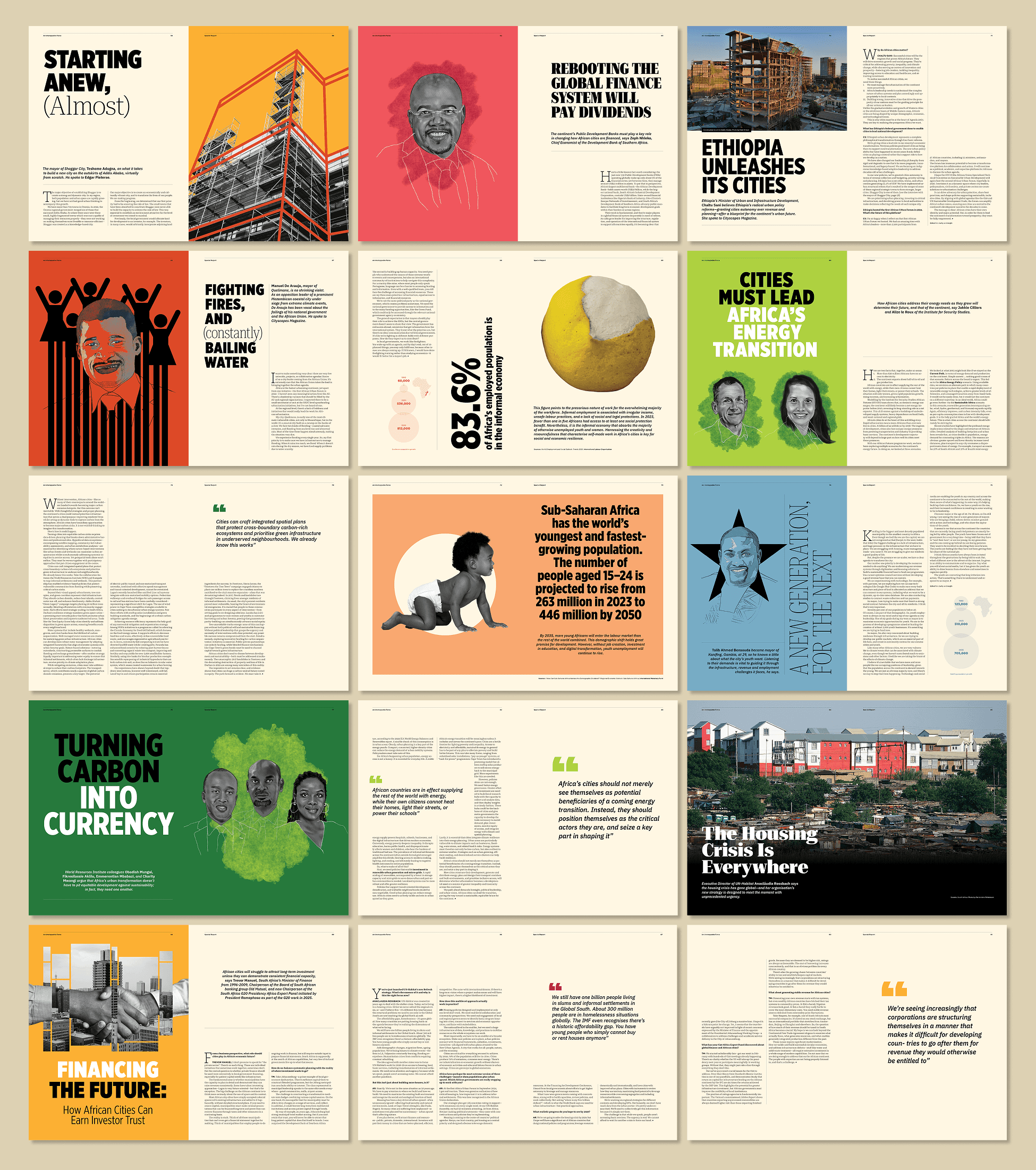
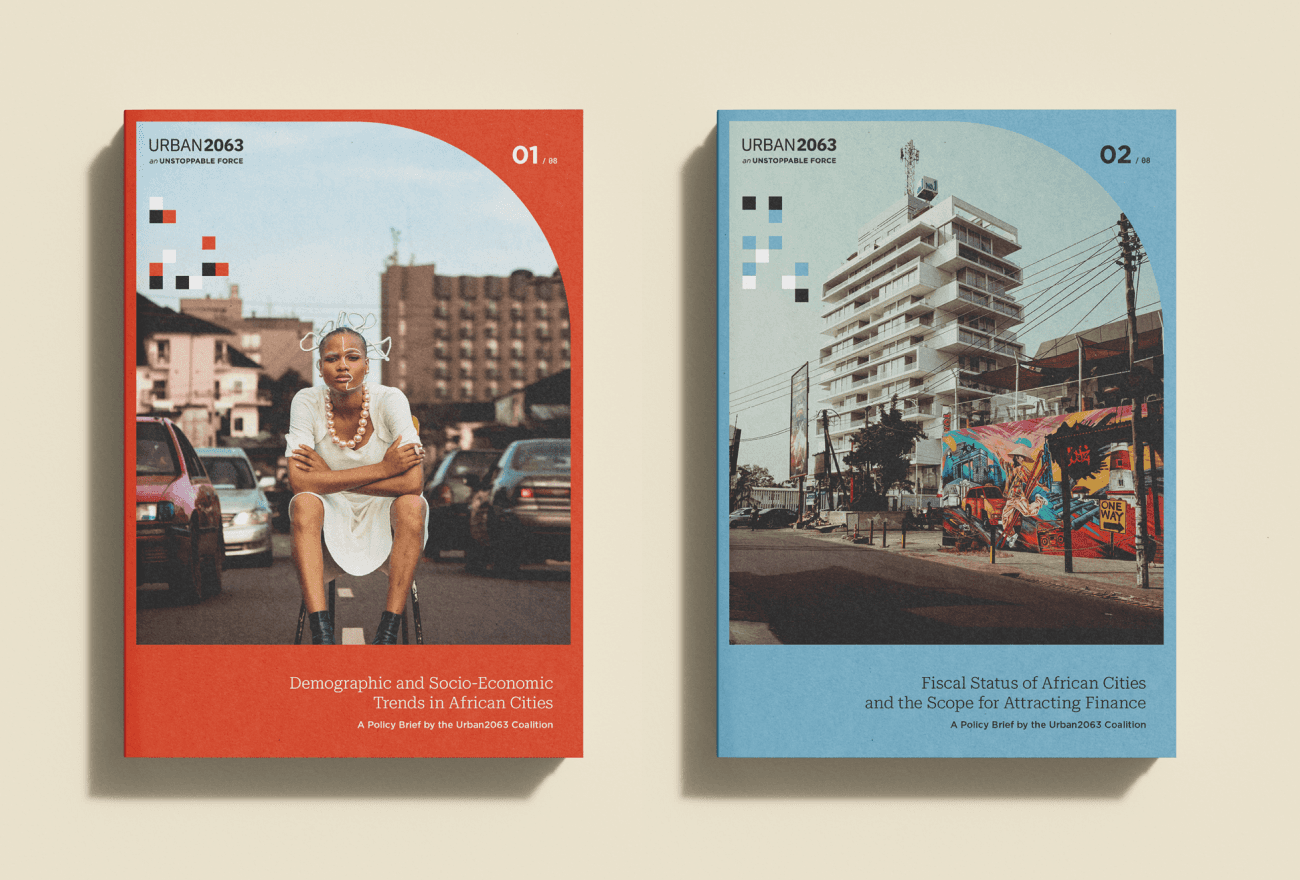
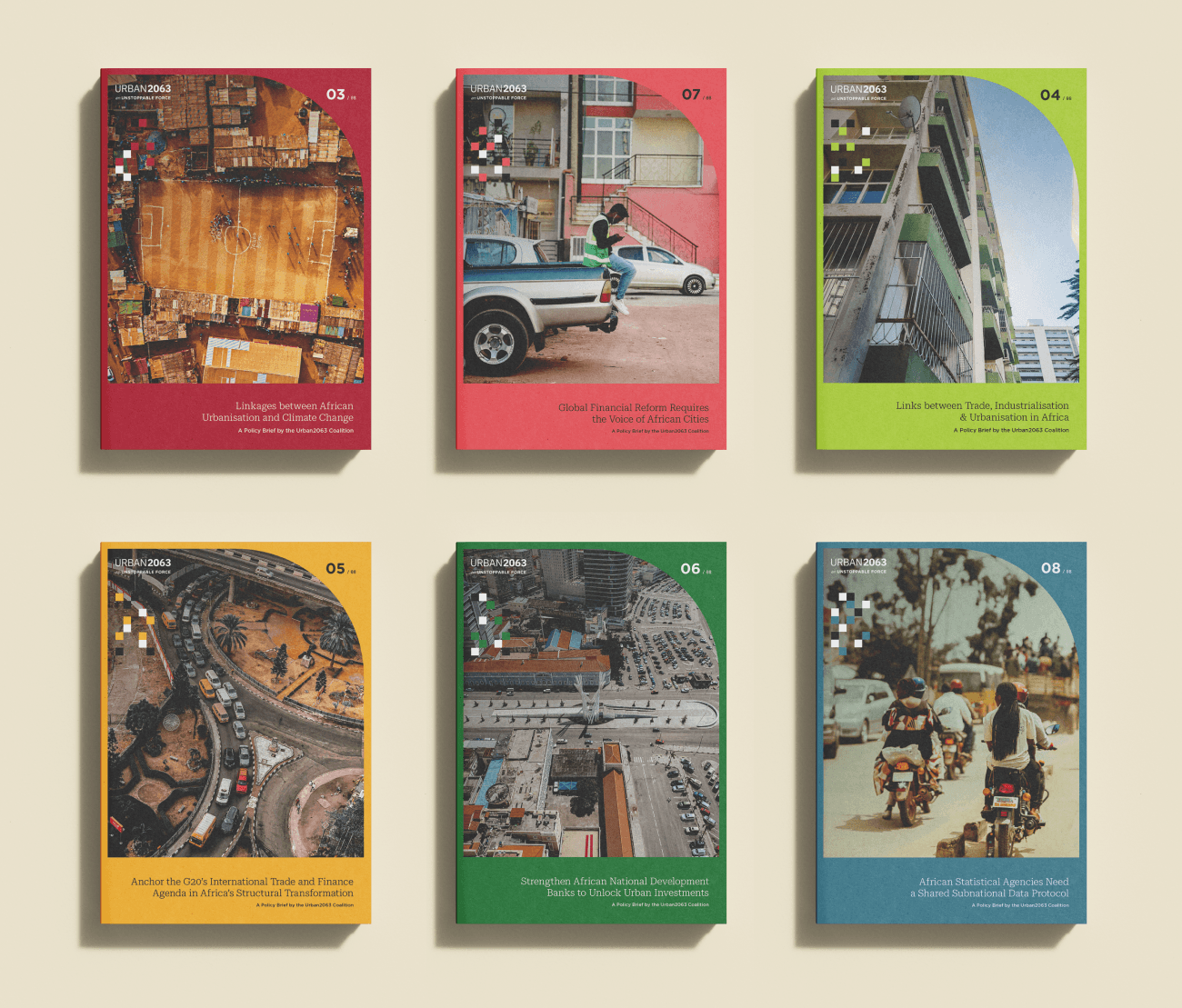
We treated the Urban2063 Special Report not as a routine academic publication but as a statement piece — authoritative without being exclusionary, rigorous without being inaccessible. The system carried complex data, infographics and photography in one consistent visual language, positioning Urban2063 as Africa's premier voice on urban futures.
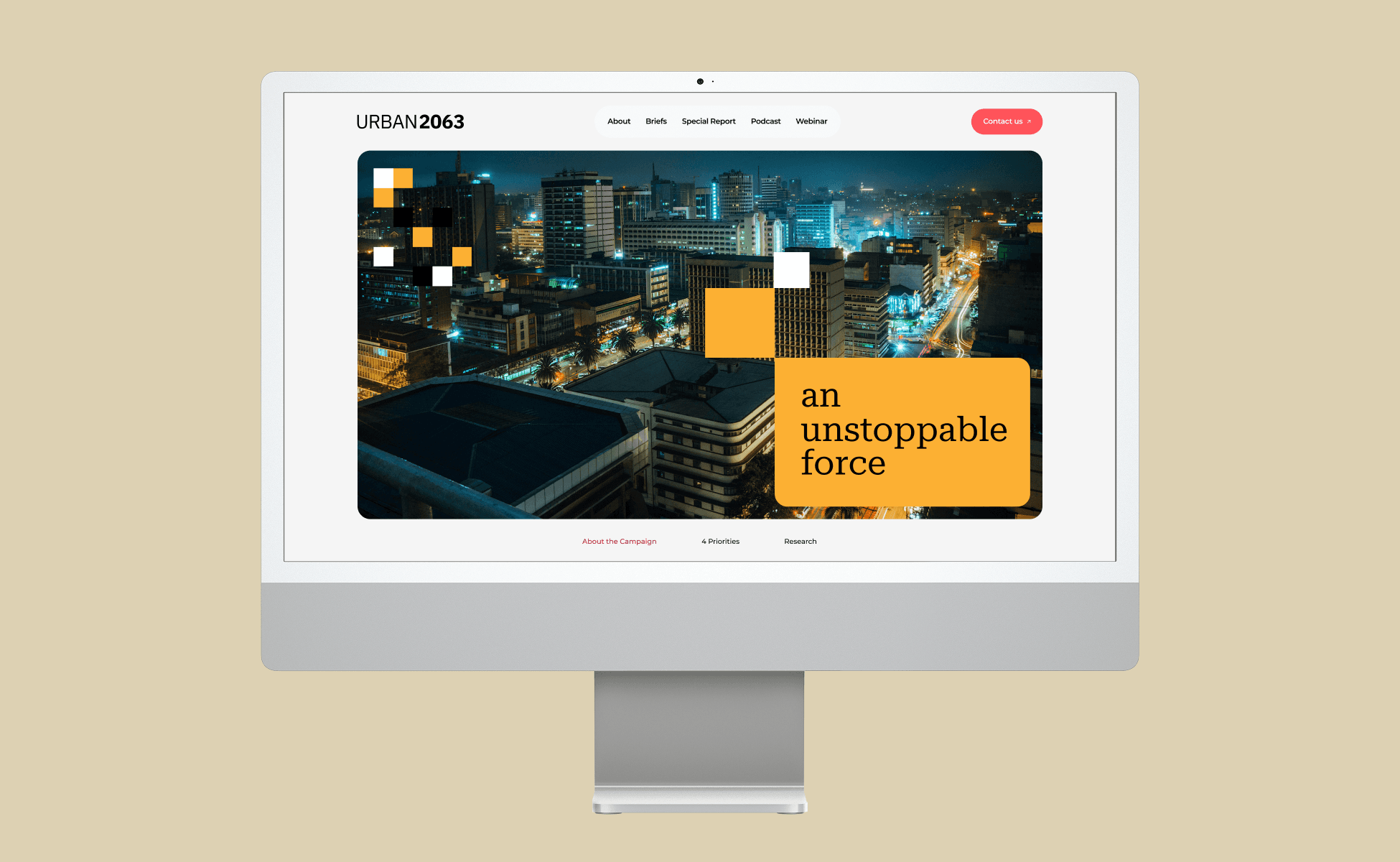
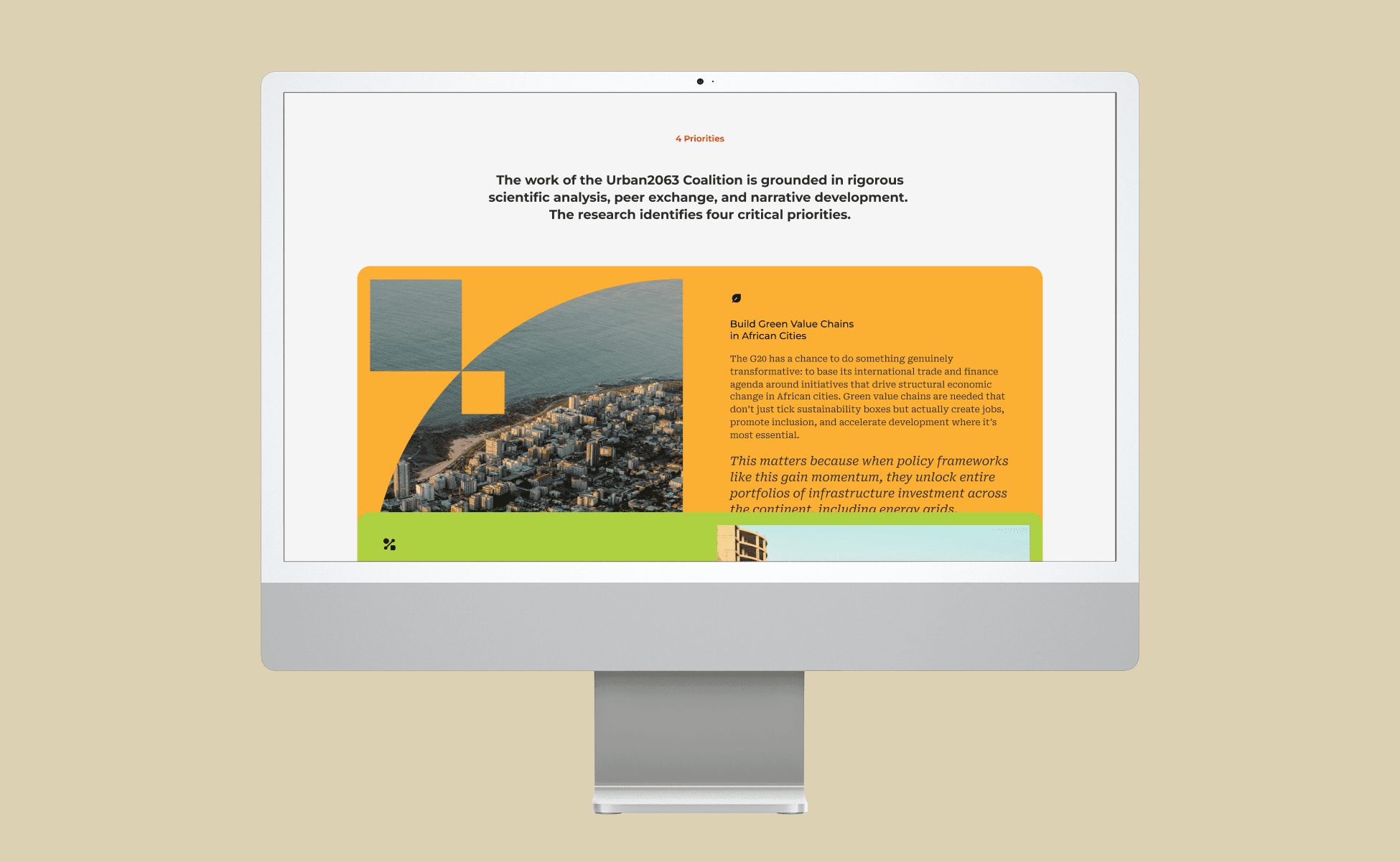
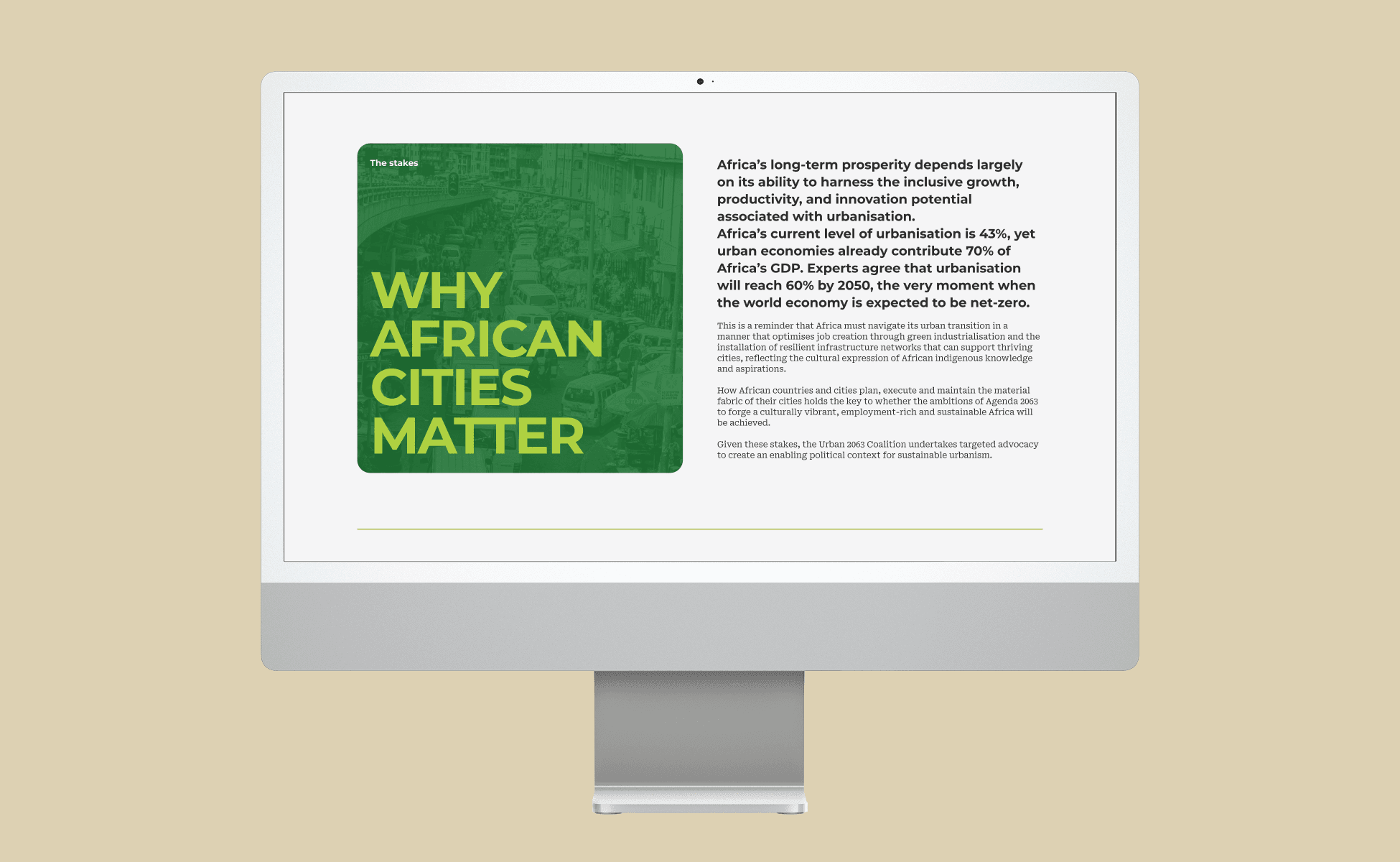
We built the website as a place to engage, not just to read. The copy reframed urbanisation as opportunity — for innovation, green industrialisation and cultural expression — and the architecture opened different doors for different people: evidence for policymakers, publications for researchers, case studies for practitioners, and a way in for citizens.
We ran the social presence as knowledge translation, not broadcast — turning urban-development discourse into narratives that resonate. A flexible template system held one identity across speaker line-ups, data infographics and publication quotes: contemporary, distinctly African, intellectually serious without being intimidating.
04 — The craft
Authoritative, accessible, and distinctly African
The identity had to command academic and policy circles while welcoming everyone else in — scholarly credibility meeting contemporary accessibility, the same confident voice from a print special report to a single social frame.
05 — The validation of purpose
The work held where it mattered: Urban2063 stopped being a research project and started being a platform — a place where findings, policy, practice and citizen voices could converge around Africa's urban future. Across print, digital and social, the same authority reached audiences research rarely does, from ministers and UN-Habitat to grassroots organisations — research made visible, accessible, and able to move.
Print, digital & social
Ministers to grassroots
Research → movement
Thought leadership
Research & synthesis
Print production
Typography
Campaign design
Digital strategy
Brand identity design
Multi-stakeholder alignment