The Library of Things We Forgot to Remember

Client: Kudzanai Chiurai
|
Period: 2021

Education & knowledge

Arts, culture & heritage

01 — The sneak-peek

Bringing an archive of resistance into the open

Kudzanai Chiurai's The Library of Things We Forgot to Remember is an interactive sound and visual archive of black resistance. BBA Liminal gave it a public identity, built it a digital home, and helped shape its physical space — so the whole collection could be opened to the people it remembers for.
02 — The liminal moment

The Library of Things We Forgot to Remember is the work of Kudzanai Chiurai, a leading contemporary Zimbabwean artist — an interactive sound and visual archive of black resistance. Pieces from it had been curated and exhibited, but the public had never been able to engage with the Library as a whole. An archive of resistance was still held behind the glass of the gallery.

BBA Liminal was tasked with creating a visual identity that could carry the Library across a digital platform and a semi-permanent physical space, designing and building a scalable platform, and shaping the graphic elements of the physical room. The brief was identity and infrastructure. The deeper problem was access: how to take a collection of real cultural weight and make it genuinely open, legible and alive to the public, rather than simply on view.

03 — The transformation

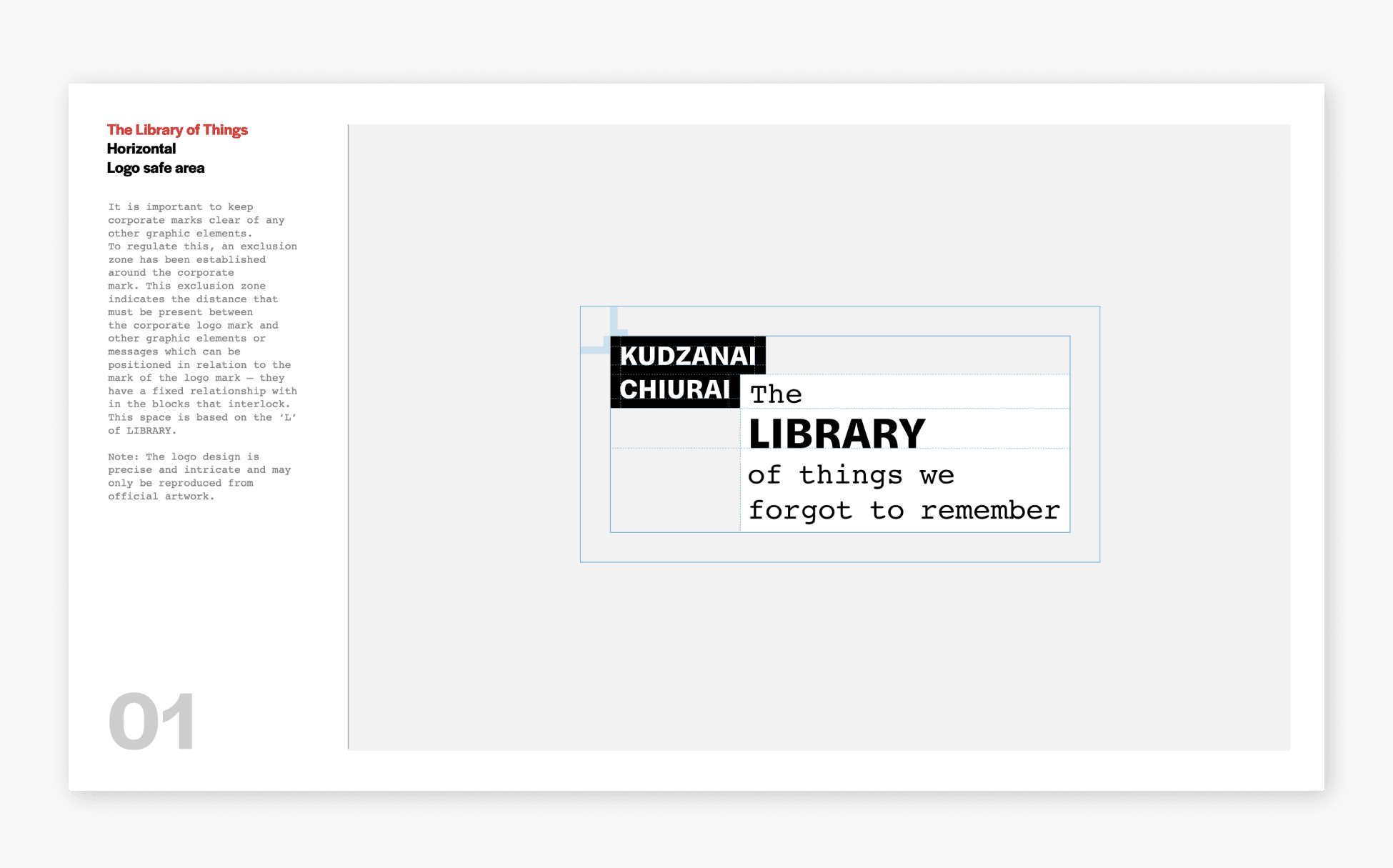
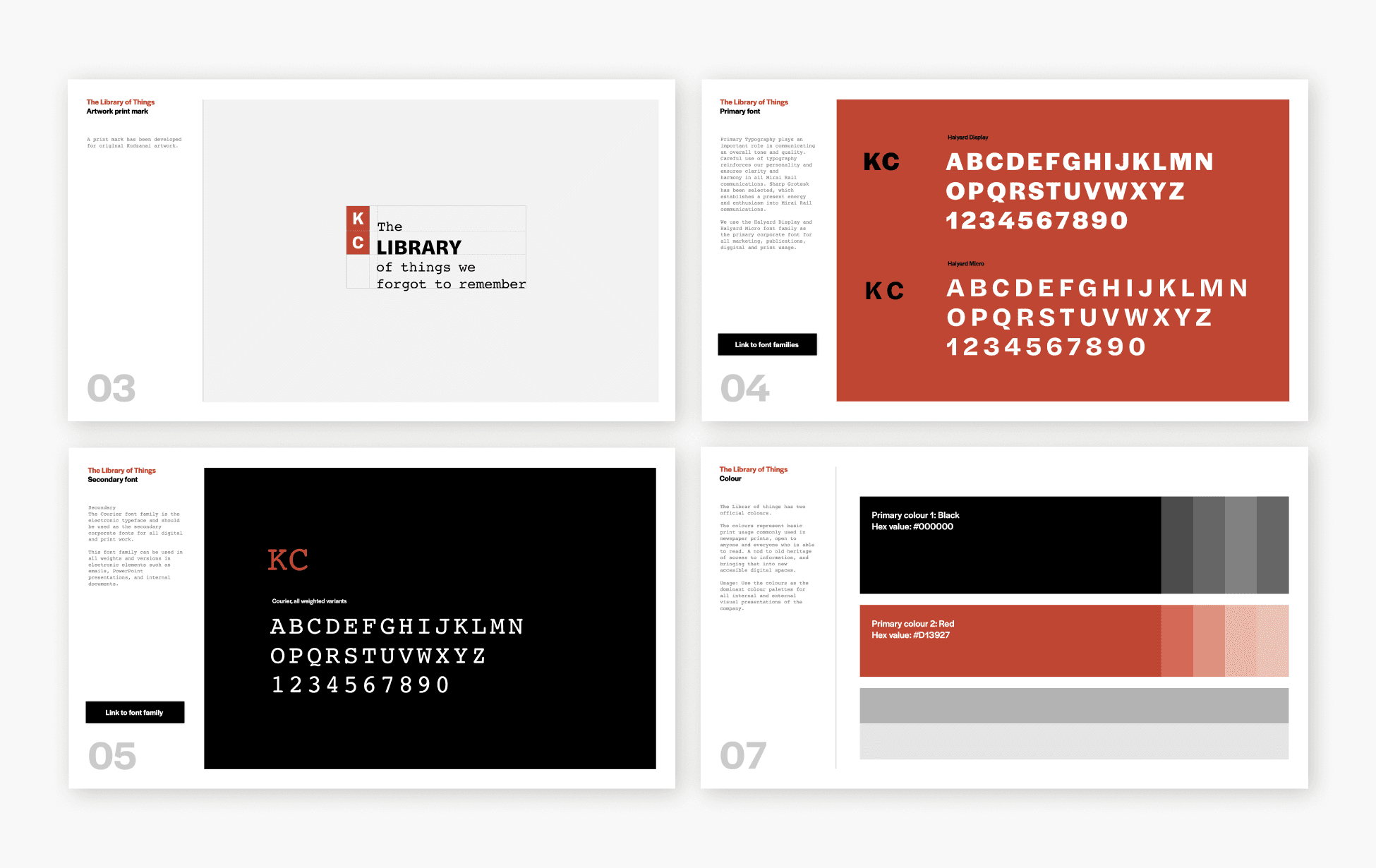
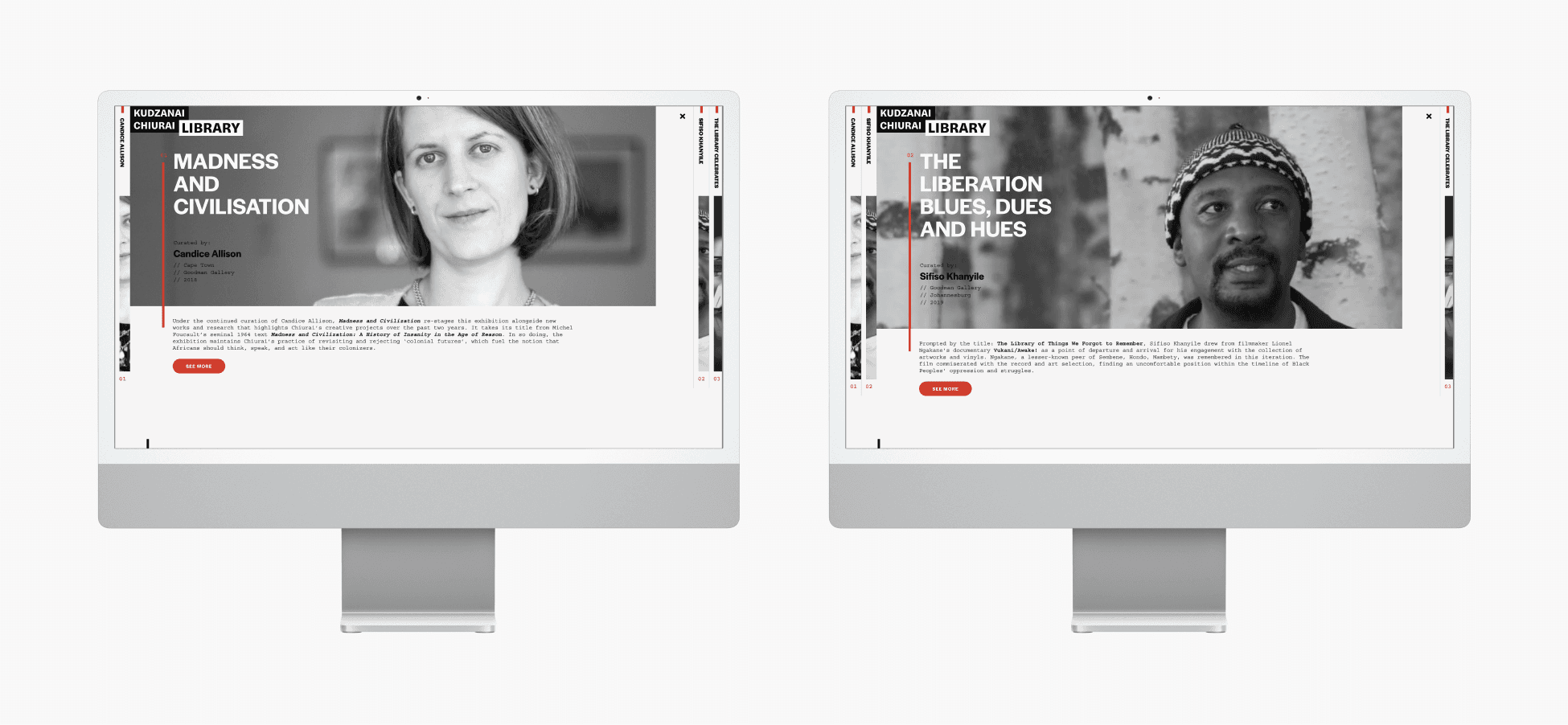
Built around public access. We worked with Kudzanai Chiurai on a visual identity drawn from Courier, the public-access typeface. The choice carries the argument in plain sight: a collection of this importance should belong to everyone.

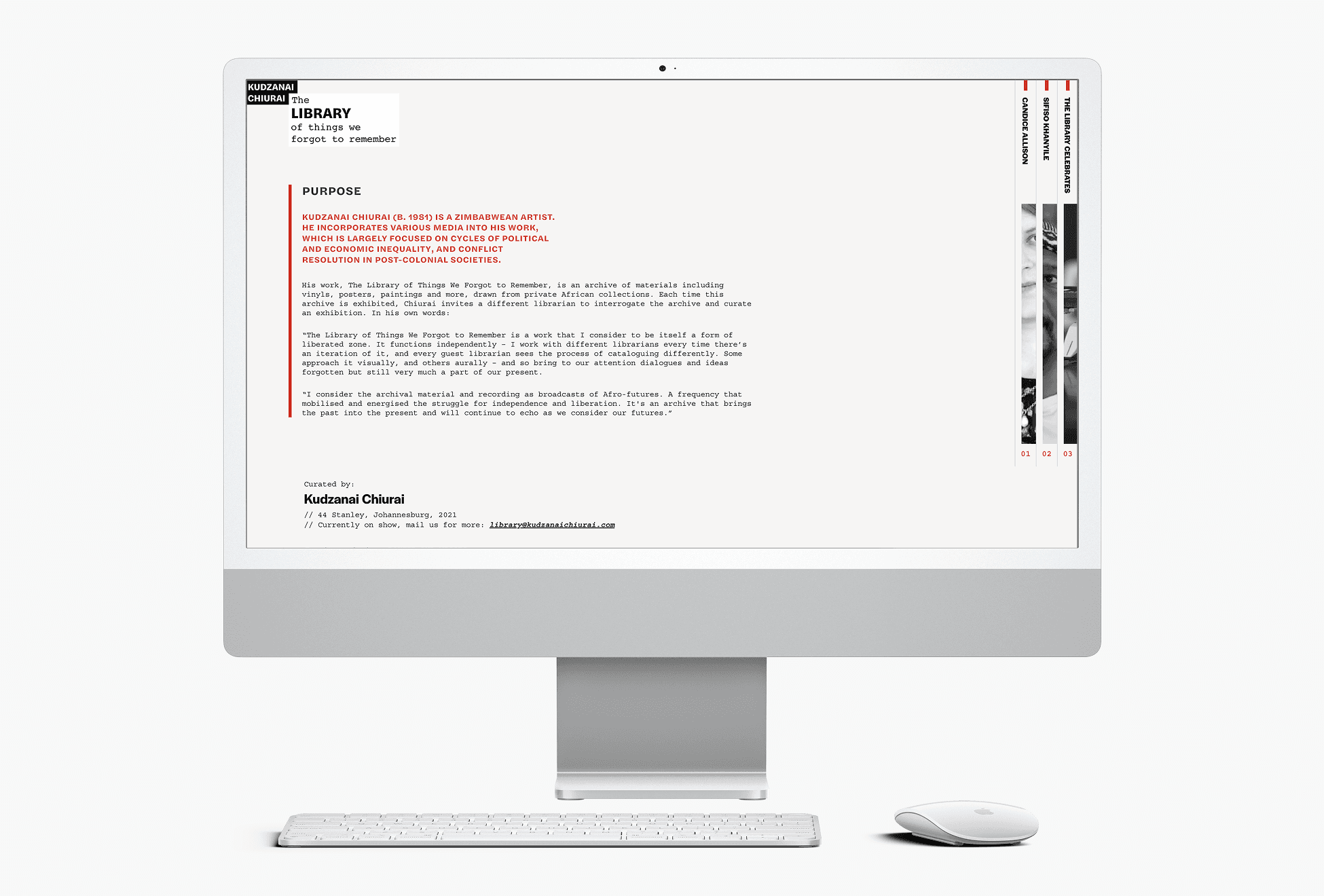
A virtual library you can enter. We designed and built a scalable digital platform that houses the collection and lets people read it intelligently. The interface plays on the library itself — click a book-spine title to open an exhibition — and gathers past shows as spotlight pieces, with the curators' learnings alongside.

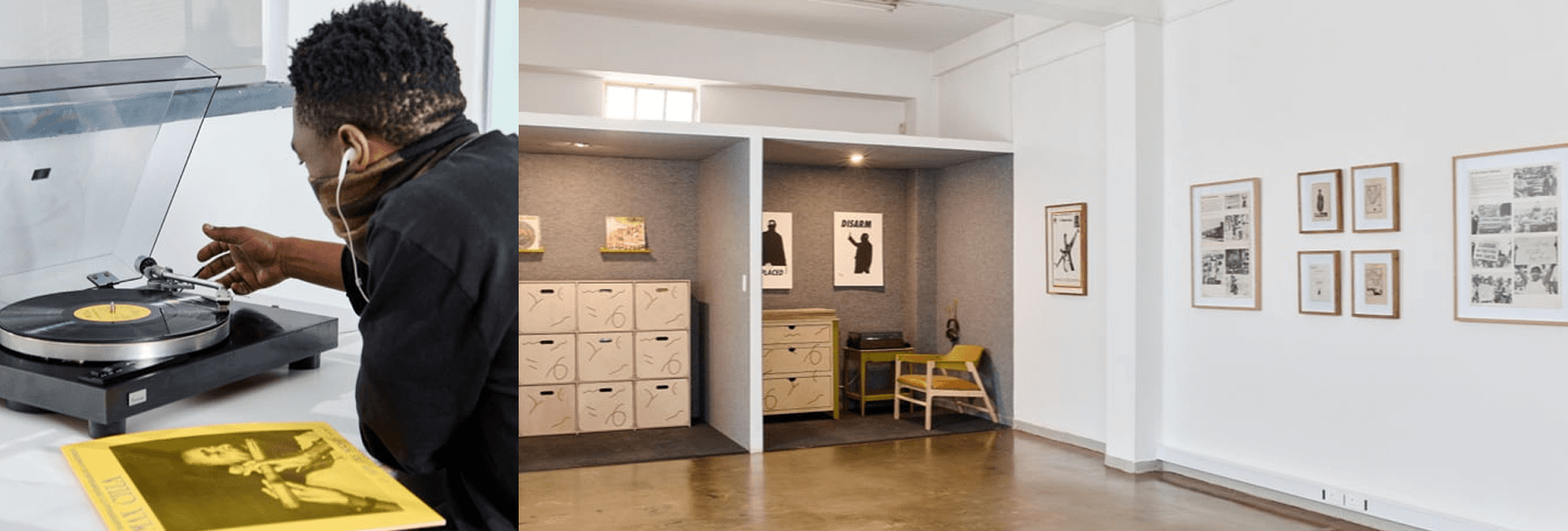
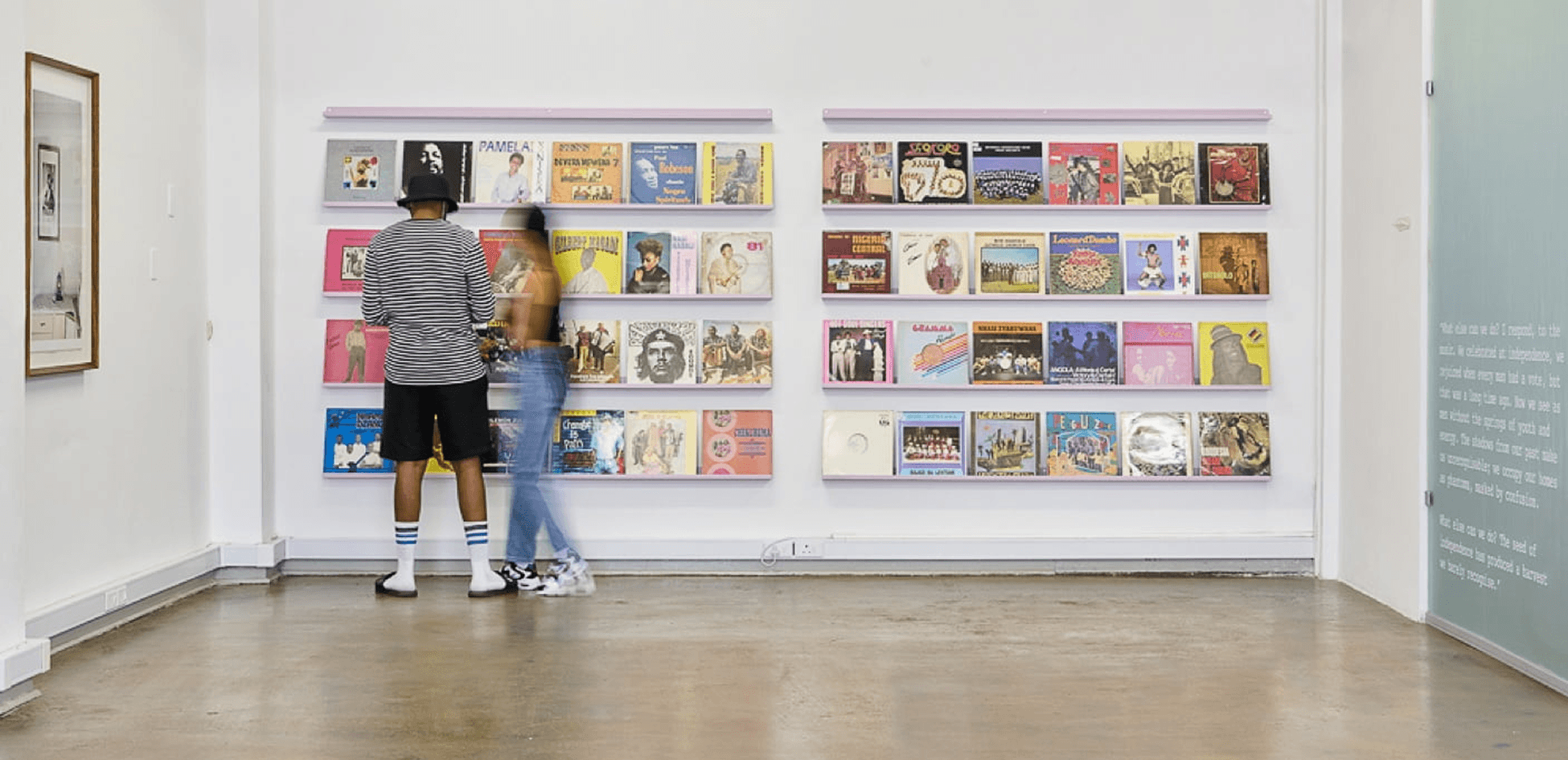
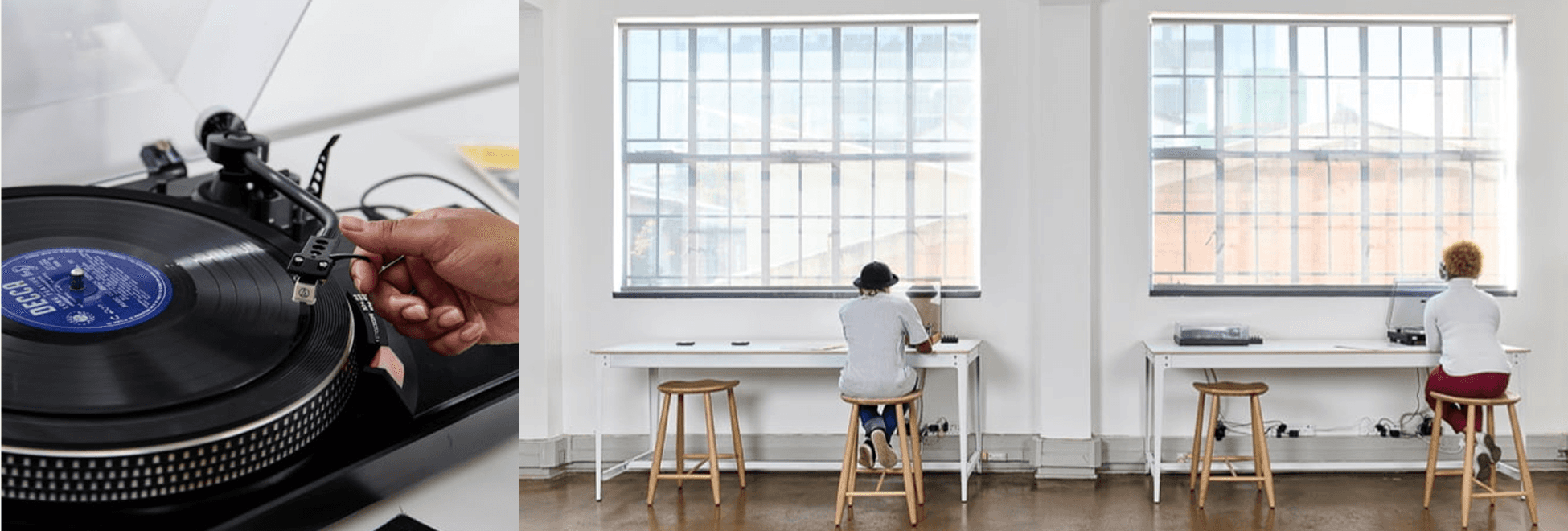
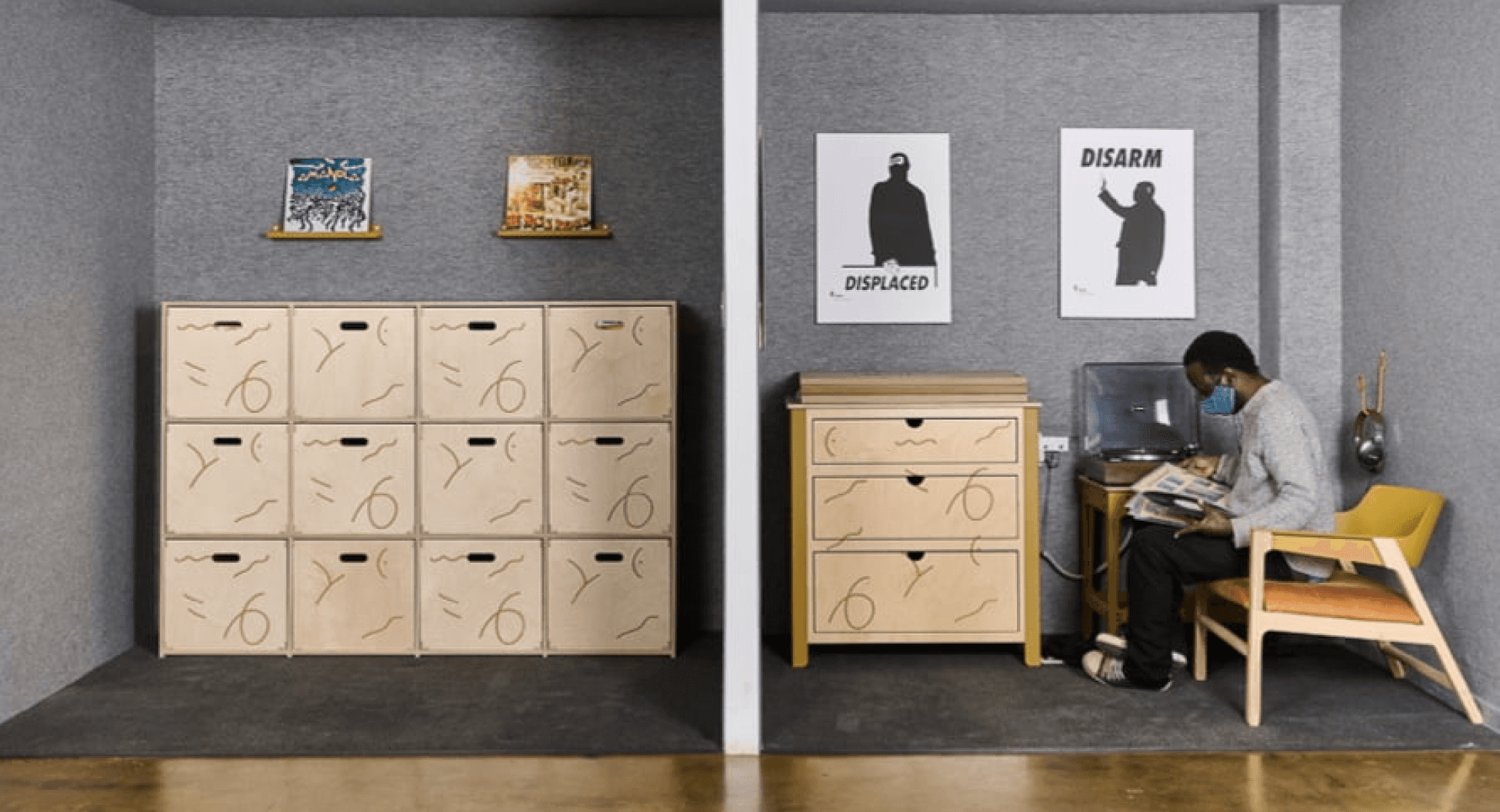
Physical meets digital. We helped design the Library's physical space at 44 Stanley Avenue, Johannesburg, where it was exhibited for a set period: big wall decals and signage that invite people in, the same identity carrying the room and the screen as one.
04 — The craft

An identity that argues for access

A public-access typeface, a digital home you navigate like a library, and a physical room at 44 Stanley — one identity across screen and space, built to bring black-resistance artefacts into the public sphere.
05 — The validation of purpose

The work opened the Library to the public, as a whole, for the first time — a digital platform anyone can enter and a physical space that invited people in. An archive of black resistance moved from curated fragments into shared, accessible memory: a collection of real cultural value, held where it can do its work of learning, compassion and change.

01 — The sneak-peek

Bringing an archive of resistance into the open

Kudzanai Chiurai's The Library of Things We Forgot to Remember is an interactive sound and visual archive of black resistance. BBA Liminal gave it a public identity, built it a digital home, and helped shape its physical space — so the whole collection could be opened to the people it remembers for.

02 — The liminal moment

The Library of Things We Forgot to Remember is the work of Kudzanai Chiurai, a leading contemporary Zimbabwean artist — an interactive sound and visual archive of black resistance. Pieces from it had been curated and exhibited, but the public had never been able to engage with the Library as a whole. An archive of resistance was still held behind the glass of the gallery.

BBA Liminal was tasked with creating a visual identity that could carry the Library across a digital platform and a semi-permanent physical space, designing and building a scalable platform, and shaping the graphic elements of the physical room. The brief was identity and infrastructure. The deeper problem was access: how to take a collection of real cultural weight and make it genuinely open, legible and alive to the public, rather than simply on view.


03 — The transformation

Built around public access. We worked with Kudzanai Chiurai on a visual identity drawn from Courier, the public-access typeface. The choice carries the argument in plain sight: a collection of this importance should belong to everyone.

A virtual library you can enter. We designed and built a scalable digital platform that houses the collection and lets people read it intelligently. The interface plays on the library itself — click a book-spine title to open an exhibition — and gathers past shows as spotlight pieces, with the curators' learnings alongside.

Physical meets digital. We helped design the Library's physical space at 44 Stanley Avenue, Johannesburg, where it was exhibited for a set period: big wall decals and signage that invite people in, the same identity carrying the room and the screen as one.


04 — The craft

An identity that argues for access

A public-access typeface, a digital home you navigate like a library, and a physical room at 44 Stanley — one identity across screen and space, built to bring black-resistance artefacts into the public sphere.
05 — The validation of purpose

The work opened the Library to the public, as a whole, for the first time — a digital platform anyone can enter and a physical space that invited people in. An archive of black resistance moved from curated fragments into shared, accessible memory: a collection of real cultural value, held where it can do its work of learning, compassion and change.

Brand & communications strategy

Typography

Signage & wayfinding

Exhibition curation

Brand identity design

Brand platform development

Positioning & narrative

Strategic brand and communications practice.

Working at the thresholds of strategy, culture, and systems.

Breinstorm Brand Architects, Mesh Club,
Trumpet Building,
21 Keyes Ave, Rosebank


Tel: 010 594 5544

Strategic brand and communications practice.

Working at the thresholds of strategy, culture, and systems.

Breinstorm Brand Architects, Mesh Club,
Trumpet Building,
21 Keyes Ave, Rosebank


Tel: 010 594 5544